Welcome, so you want to learn Japanese well you've come to the right place then! In order to help you to pronounce Japanese correctly I have included audio
clips throughout. Before we start to talk about the different Japanese writing systems namely Katakana, Hiragana and Kanji, it is good to start with some
Japanese words and phrases written in Rōmaji (Western characters). Learning a new language is fun but can be daunting so lets start with the basics first of
all. I have a quiz at the end to challenge your knowledge, good luck!
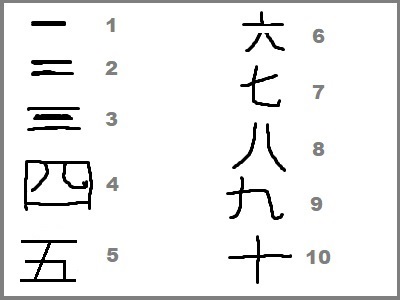
Task: Try counting from 1 up to 10, then cover the numbers or look away and try it.
If you add a number to Jū(10) you can make another number. 12 would be Jūni for example. 20 would be Nijū and 30 would be Sanjū and so on.
25 would be Nijūgo. To say your age in Japanese just add sai to the number. For example age 34 would be 'Watashi wa Sanjūyon-sai desu' (I am 34).
Note, there are some exceptions. For age 20, to say you are aged 20 you would say 'Watashi wa hatachi-sai desu' (I am 20). If the age ends in 0, 1 or 8 it
is jūssai(10), jūissai(11) and jūhassai(18) respectively.
I have some additional information regarding numbers which you will learn about in the Katakana, Hiragana
& Kanji section.
Facts about Japan
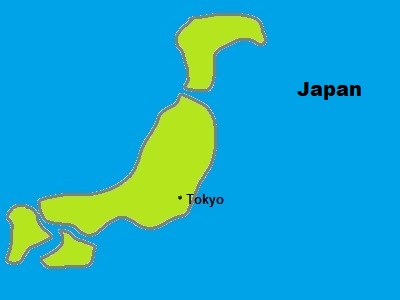
Japan (Nihon) has a population in excess of 120 million with four main islands, the current capital is Tōkyō on the main island of Honshu.
The far north has a cold climate and the southern end has a humid and warm climate.
The other three main islands consist of Hokkaidō (far north), Kyushu (far south) and Shikoku (far south).
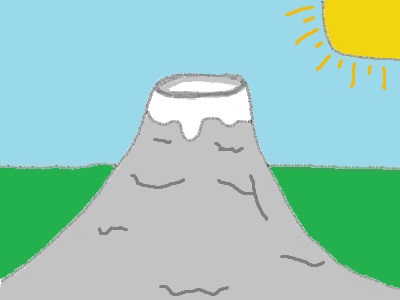
The highest mountain is known as Fuji-san or Mount Fuji.
Additional Japanese Words & Phrases
Basic Commands
Namae (name)
Motto yukkuri itte kudasai (speak slower please)
Mō ichido itte kudasai (can you repeat that)
Hai (yes)
Iie (No, sounds like 'eyeh') Chigaimasu also means no or not right
Wakarimashita (I understand, audio below)
Wakarimasen (I don't understand)
Dōzo (go ahead)
Gambatte Kudasai (good luck)
Additional Instructions
Sumimasen (sorry or excuse me)
Gomen kudasai (can I come in?)
Nihongo ga dekimas(u) ga amari jozu dewa arimasen. (I can speak Japanese but not very well.)
Bai bai (goodbye)
Ja mata ne (see you later or soon)
Sayōnara (goodbye for a while)
Wakarimasu ka (do you understand?)
Chotto matte kudasai (please wait a moment)
Omedetō gozaimasu (Congratulations)
Tasukete kudasai (please help)
General Shop/Restaurant Phrases
O-hairi kudasai (please come in)
Irasshaimase (welcome)
(item, see table) + ga arimasu ka (do you have X, as before the 'u' is silent.)
(item, see table) + o utteimas(u) ka (do you sell X)
(item) + o kudasai (may I have ____)
(item) + o tabetai desu (I want to eat ____)
(item) + o nomitai desu (I want to drink ____)
(item) + wa ikura desu ka (how much does ____ cost?)
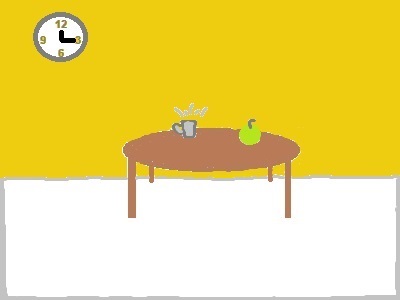
As you've learned previously, to ask what time it is you would say 'Ima nanji desu ka'.
To answer you just say the number and add ji (e.g. niji 2:00)
There is one exception, 4:00 would yoji;
7:00 is always shichiji and 9:00 is kuji;
Gozen (morning/am) and gogo is afternoon or pm, goes before the time;
Jūichi is 11:00 and jūni is 12:00;
Finally, han means half-past and ji means o'clock.
Weather & Seasons
To describe good weather you would say "Ii tenki desu ne". For other weather conditions:
It is fine - Hare desu
It is raining - ame desu
It is windy - kaze desu
It is snowing - yuki desu
It is cloudy - kumori desu
It is cold - samui desu
It is warm - atatakai desu
It is hot - atsui desu
It is foggy - kiri desu
Seasons
Winter - Fuyu
Spring - Haru
Summer - Natsu
Autumn/fall - Aki
Hobbies & Likes
The word for hobby is shumi and below is a list of a few:
Yachō kansatsu (bird watching)
Sunōbōdo (snowboarding)
Tenisu (tennis)
Hon (books)
Gēmingu (gaming)
Rokku kuraimingu (rock climbing)
Then, you just put your hobby in front like so - Yachō kansatsu ga suki desu. (I like bird watching).
You can also say this - shumi wa tenisu desu (my hobby is tennis). Alternatively, you could say 'supōtsu wa rokku kuraimingu ga suki desu' which means
the sport I like is rock climbing.
Test Quiz
You can either grab a pen and paper or just use the text box below to write your answers. Once you're happy with your answers press the button below
to reveal the correct answers.
What is 6 in Japanese?
How would you say 4 o'clock?
What is the large northern most island called?
What is the word for breakfast in Japanese?
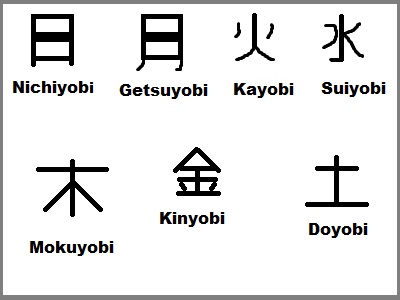
What is thursday?
What does 'hon' mean?
What number is 'jū' in english?
How would you greet someone during the evening?
What should you say after saying someone else's name?
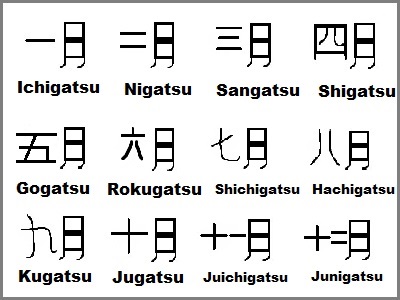
Which month is 'gogatsu'?
How would you say 'do you have eggs' in Japanese?
What is jū + yon?
Roku
Yoji
Hokkaidō
Asagohan or Chōshoku
Mokuyōbi
Book/books
10
Konbanwa
San
May
Tamago ga arimasu ka
Jūyon(14)
There is more info on how to pronounce the vowels on the 'Learn Katakana, Hiragana & Kanji' section of this site.
If you were wondering what the symbols on the banner image were they are the Kanji characters for Nihongo, the Japanese Language.
Simon Towler has many hours of Japanese language experience. I hope to further my understanding of the Japanese language.
As part of my future plans I may update the site so be sure to bookmark it. If I've helped you to learn Japanese there is a donation link
below.